The Pellet Design & Texture Mean Something
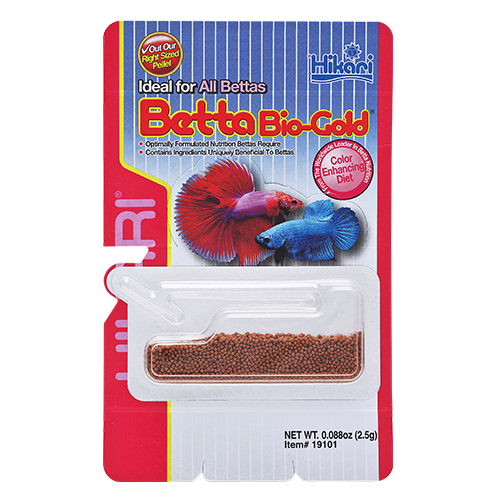
The inclusion of premium-select fish meal which provides a superior protein source, Astaxanthin which helps enhance coloration, Grape Seed Extract (polyphenol) which has been shown to reduce the impacts of aging and Spirulina which naturally offers a high concentration of usable vitamins, make this a daily diet perfectly suited for bettas and their high stress nature.
- Bio-Technology provides active color enhancement
- Helps reduces color fading
- Higher feed efficiency helps reduce water quality issues
- Contains ingredients uniquely beneficial to bettas
- Supports immune system health
Perfectly Sized Pellet:
For bettas 1.5” and up, we recommend feeding three (3) pellets of Betta Bio-Gold® up to three (3) times daily. During feedings, feed one (1) pellet at a time and make sure the betta completely consumes each pellet. Add one (1) pellet per 1/4 inch of growth, never feeding more than five (5) pellets at one feeding. If your fish requires more than five (5) pellets twice a day, then add a feeding and divide up the total pellets per day in to the total number of feedings. Remove any uneaten food after the feeding period. Do not overfeed, as it can be detrimental to the health of your betta and the water quality.
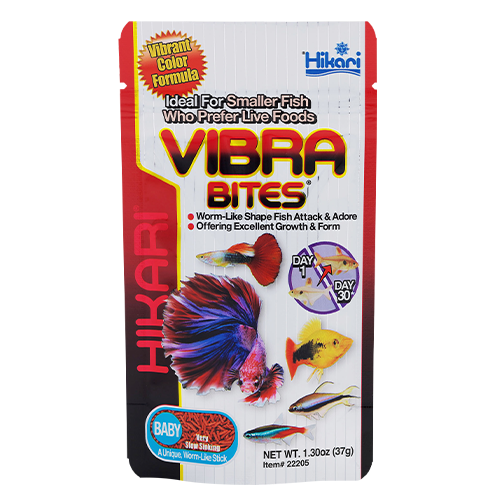
For smaller bettas (under 1.5″ in length from the tip of their nose to the base of their tail, before the fins) we suggest feeding Hikari® Micro Pellets®. Feed two (2) to three (3) times daily the amount your fish will completely consume in a few minutes. Additional feedings can be made if they are at least three hours apart and at least three hours before all lights are out in the room. When your betta gets larger than 1.5” switch to Betta Bio-Gold® or consider Hikari® Vibra Bites® Baby Sticks.
NOTE: Hikari® Betta Bio-Gold® contain higher levels of natural ingredients which may cause a slight change in color from one production lot to another. Rest assured because of our rigid quality standards each package meets our superior nutritional specifications.
Ingredients
Fish meal, wheat flour, soybean meal, rice bran, potato starch, krill meal, corn protein meal, wheat germ meal, brewers dried yeast, wheat gluten meal, fish oil, DL-methionine, spirulina, garlic, dried seaweed meal, astaxanthin, choline chloride, vitamin E supplement, L-ascorbyl-2-polyphosphate (stabilized vitamin C), inositol, d-calcium pantothenate, riboflavin (vitamin B2), vitamin A supplement, thiamine mononitrate, pyridoxine hydrochloride, niacin, folic acid, vitamin D3 supplement, biotin, vitamin B12 supplement, P-aminobenzoic acid, disodium phosphate, salt, ferrous sulfate, magnesium sulfate, zinc sulfate, manganese sulfate, copper sulfate, calcium iodate, red 3 (artificial color).* 08-50D
Guaranteed Analysis
| Crude Protein |
Crude Fat |
Crude Fiber |
Moisture |
Ash |
Phosphorus |
| min. 0.7% |
min. 38.0% |
min. 4.0% |
max. 3.0% |
max. 10.0% |
max. 12.0% |
| Vitamin A |
Vitamin D3 |
Vitamin E |
Ascorbic Acid |
| min. 19,000 IU/kg |
min. 2,900 IU/kg |
min. 1,500 IU/kg |
min. 430 mg/kg |
* Because of our commitment to providing the highest quality nutrition available, some differences in ingredients may occur due to regular formula updates.
Betta Care Basics:
Siamese bettas are often referred to as "fighting fish" because the males can and will attack with one another. You should never keep males together for this reason. If a betta is you first aquarium pet, we suggest a tank size at minimum of 3 gallons (approx. 11.4L) for a single betta with a secure lid, an aquarium heater and a filter with gentle flow. In a larger aquarium, a single betta with other non-aggressive aquatic pets like neon tetras, pygmy corydoras or mystery snails. Keep your water with a pH between 6.8 and 7.5, and try to maintain a temperature between 76°F (24°C) and 82°F (28°C), free of rapid changes.
Before purchasing any fish, always be sure to cycle a new tank for at least a few weeks to build up beneficial bacteria. Use a reliable water conditioner like Ultimate® whenever adding tap water to your aquarium to remove chloramines, chlorine and ammonia. The most important part of maintaining good water quality is changing about 15 to 20 percent of your water volume weekly. For homes under 3 gallons with no filter, a 100% water change will be necessary. Common tank sizes for bettas are 5 to 10 gallons, which provide more space for your betta to roam.
Common Signs of Illness & Disease:
Some betta diseases can be treated easily while others can be fatal. A majority of the time, this conditions can come from poor water quality, overfeeding practices, and overall stress. Aquarium Solutions® Betta Revive®is an easy to use health aid for treating protozoan, bacterial or fungal-related diseases. During feedings, keep an eye out for signs of common illnesses like fin rot, ich or dropsy, as some can progress rapidly. If your betta lacks an interest in food, swims erratically, or has patches of missing scales, then check your parameters with an water quality test kit and treat accordingly.
 Download the Betta Care Sheet (PDF)
Packaging & Pellet Size

Approx. 1.1 ~ 1.4 mm
Floating Pellet |
| 0.088 oz (2.5 g) - #19101 |
| 0.70 oz (20 g) - #19110 |